A Year at GoFreight
What changed when I joined a team I respected, and started designing inside a system this large.
Yu-Yun Wu · Product Designer · 2025–2026
“She approaches design with an incredibly open mind, especially when navigating the AI era... I was consistently impressed by her ability to objectively evaluate the pros and cons to iterate on these innovative approaches.”
Why I Joined
The only thing that can make a job truly amazing or a complete waste of time is the people. Focus on people you truly respect. Your heroes will lead you to the career you want.
I only read this passage after I had already joined GoFreight. But it explains, almost word for word, why I made the decision. My previous job combined UI/UX and Industrial Design in a single role. What pulled me away was the writing of a senior product designer at GoFreight, someone with a decade of experience whose posts made me think this is who I'd want to learn from up close. I went through the interview, and one thing was clear by the end: coming here meant stepping into an unfamiliar industry to work with someone I respected.
Who an ERP Actually Serves
My background coming in was on the IoT side: an Industrial Design major in college, then a first SaaS role on a platform built around IoT devices. That work was always tied to hardware, design living on top of the device.
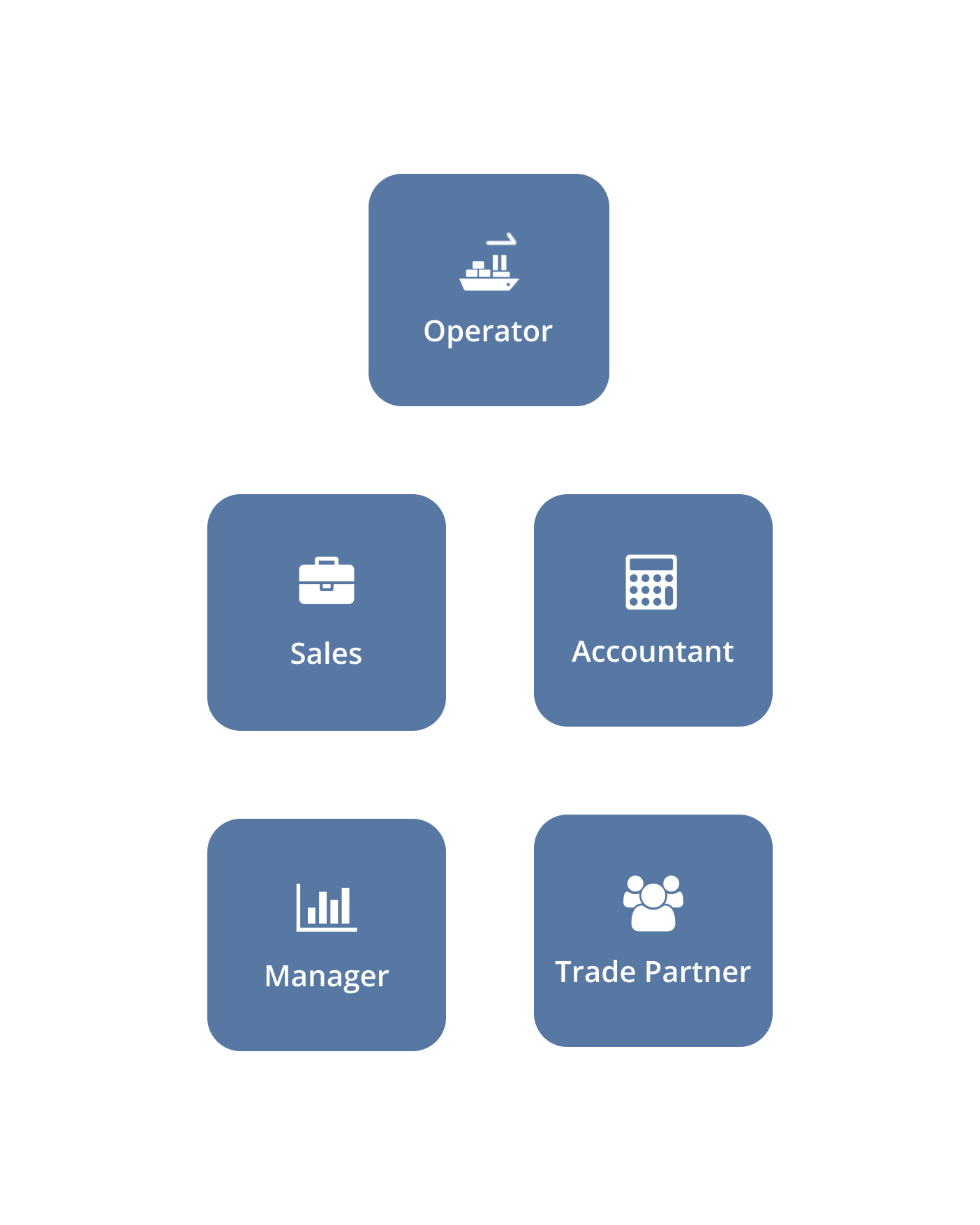
At GoFreight, I was suddenly designing pure software, an ERP system on top of that. The difference was bigger than I expected. The users weren't only OPs (operators), but also management who open the system to read reports and make decisions, and accounting staff who issue invoices and track cash flow. Each role has a different daily workflow, and not everyone logging in is here for shipments. Some come in to check whether the books balance, or which clients still owe money. Designing for that many shapes of a daily routine at once was a kind of training I never got in hardware-driven software.
Designing With AI, as User and Maker
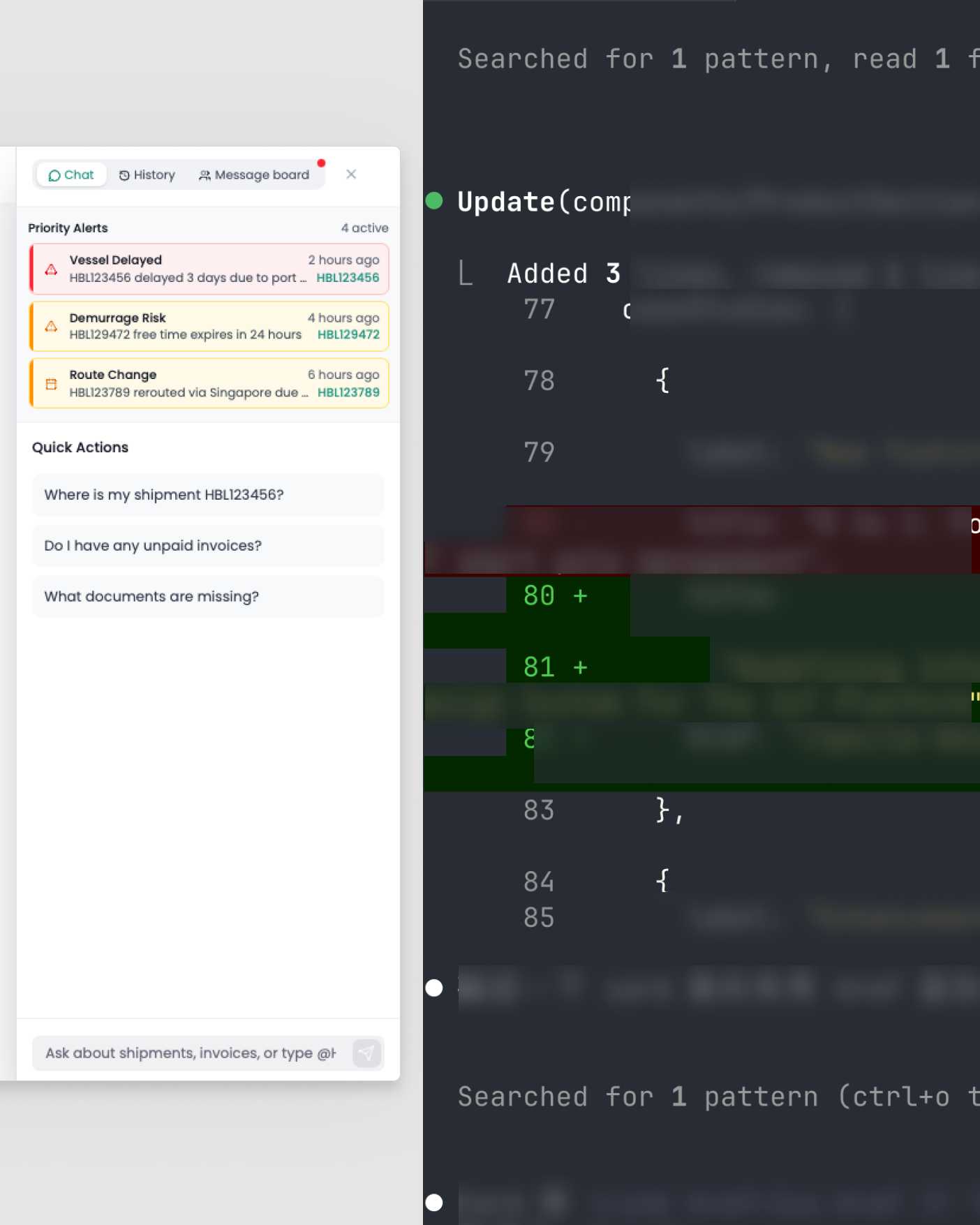
The most pivotal shift in my career happened at GoFreight as I moved from drawing interfaces to building products. As the industry moved toward a Builder Mindset, my manager and I made a deliberate choice to migrate our prototyping workflow out of Figma and into an environment based on Git using Claude Code.
We rebuilt the GoFreight Prototype into an internal only deployed website with a clear architecture consisting of Base Components, Common Screens, and Project Branches. This was not just a change of tools but a change of philosophy. By using Claude Code within a local development environment, I began committing code directly and opening Pull Requests for engineering review.
This technical agency allowed us to embrace Human in the loop design as both users and makers. We developed custom AI Design Skills to optimize our output:
- The GF Prototype Skill: This automates the initial structural layout by walking through a PRD before design begins.
- The Design Critique Skill: This acts as a logic gatekeeper by checking prototypes for missed edge cases or violations of our design principles.
By folding engineering tools such as Git workflows, PR reviews, and AI assisted coding into my daily practice, I realized that a modern value for designers lies in judgment. It is about knowing when to use Figma for rapid ideation and when to use Claude Code for high fidelity construction backed by data.
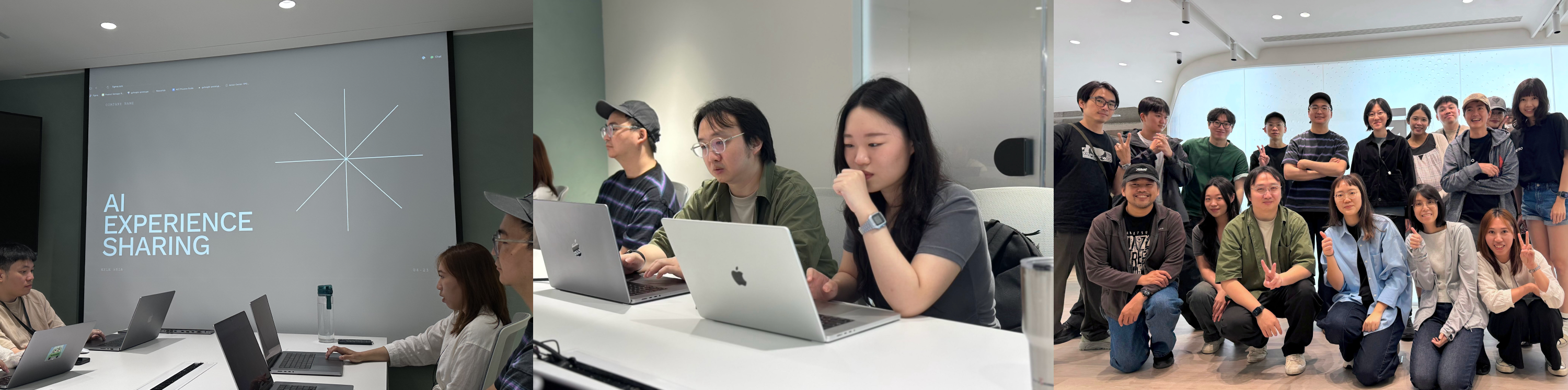
After we shaped the practice inside GoFreight, LINE's design team invited me to share our AI workflow. The session became a two-way exchange on how AI is reshaping the way design teams work.
Driving Cross-Team Alignment on an AI Feature
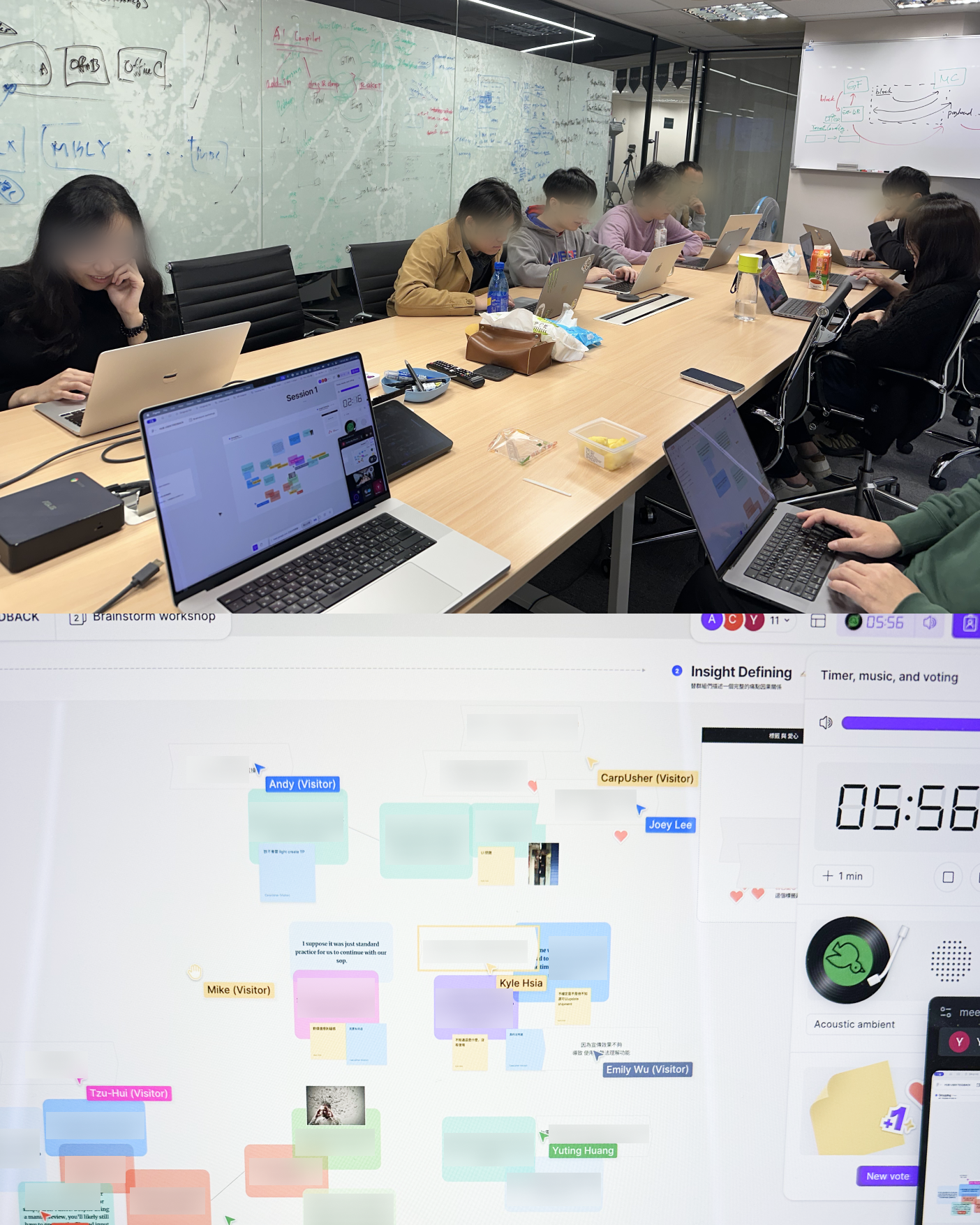
The workshop I hosted at GoFreight was the kickoff for a major AI feature. The team was about to start building, and the session's job was to converge a round of user feedback we'd just collected from interviews into a shared direction. More than ten people joined, spanning RD, PM, and design. As host, I held the space for those three sides to brainstorm and align together.
By the end, we'd agreed on the Q2 Roadmap, and everyone left on the same page about what mattered most. Driving that kind of session is where the designer's role goes one step beyond delivery, into the seat that coordinates cross-team consensus.
Decisions, Backed by Data
At GoFreight I worked with GA4 and Mixpanel. What surprised me most was how dramatically scale changes what data can show you. With over a thousand freight forwarder clients, event tracking, funnel analysis, and behavioral analytics filter out individual-user noise in a way they can't in smaller samples. They surface signal that would otherwise drown.
Just as importantly, quantitative data and qualitative interviews don't always agree: what users say and what they actually click are often not the same thing. Learning to read the two together is the data instinct I internalized here.
What I'm Taking With Me
I came to GoFreight following someone I respected. What I'm leaving with is a kind of attention I had to build for myself.
At GoFreight, almost no feature stands alone. The system is large and the workflows are tangled. Inheriting one flow means inheriting everything connected to it. When I'm updating a path, the first question I've learned to ask is whether other paths run through the same place, and whether my change still lets those users get where they were going. A flow can make sense on its own and still break the moment you remember the rest of the product is already moving around it. This was the part I most underestimated coming in.
The other kind is more familiar. Before any pixel, there's still the slow work of understanding what a user actually needs, which is usually something underneath the feature they ask for. Sometimes the existing solution was already fine and we just hadn't told them. The priority is the experience, and more screens don't always make the experience better.
Neither of these is work I'd hand off. AI can do a lot now: prototype, build, refactor. But holding both kinds of context at once, the system one and the human one, is still a person's job. That's the part I'm taking with me.
Around the Office